Enterprise Conversational AI Platforms: Unlocking AI Sales Automation Solutions for Business Growth
Explore enterprise conversational AI solutions for sales automation, AI voice agents, lead qualification, and scalable customer engagement.

Kennedy Asuru
Jan 7, 2026
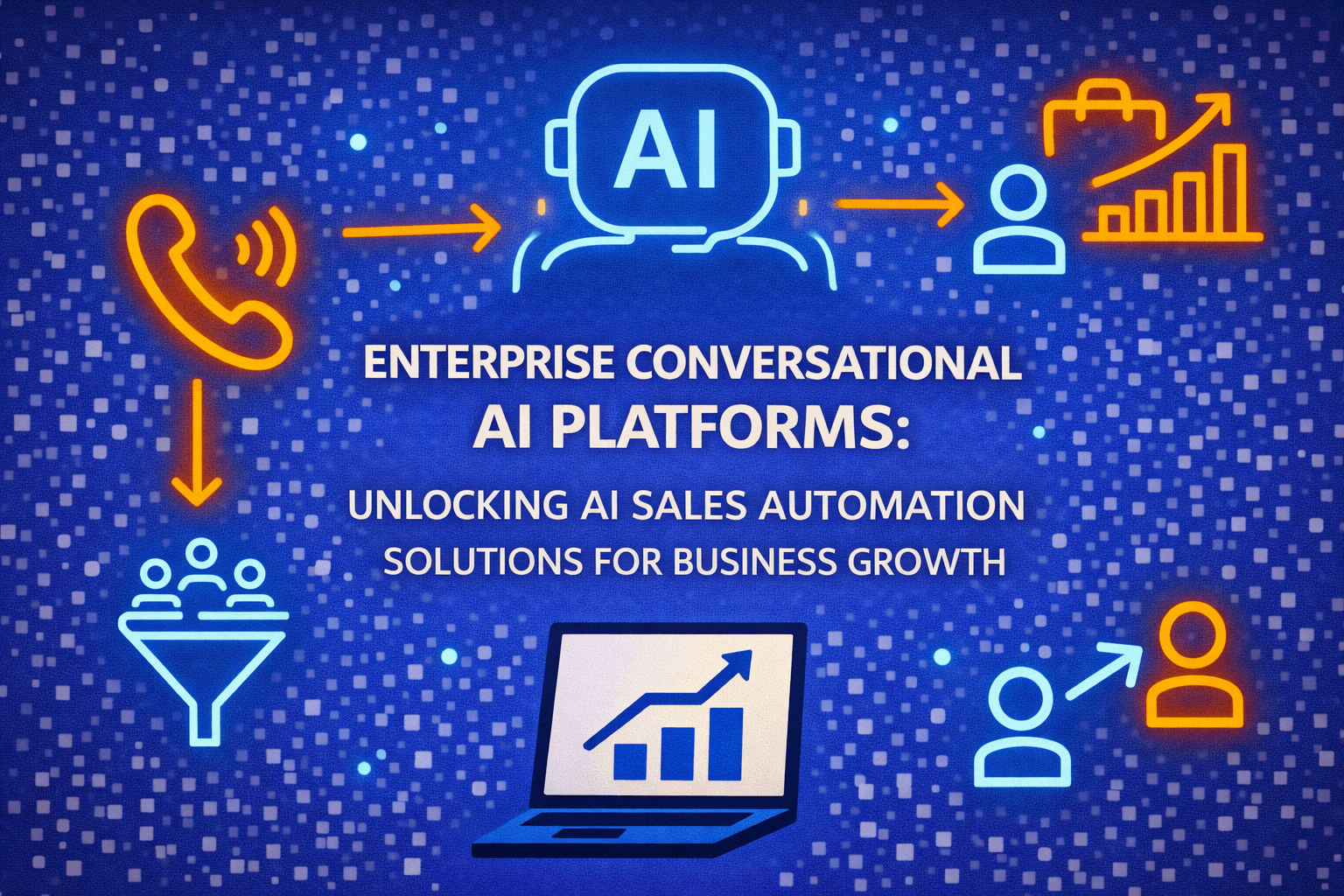

Conversational AI is revolutionizing the way businesses engage with customers, providing a seamless and efficient communication channel. This article delves into the transformative power of conversational AI in enterprise sales, highlighting its benefits, mechanisms, and best practices. As companies strive for growth, leveraging AI sales automation can significantly enhance lead conversion and operational efficiency. The rise of AI-driven solutions addresses common pain points in sales processes, offering innovative ways to qualify leads, automate outreach, and integrate with existing systems. We will explore the key aspects of conversational AI, including its definition, benefits, and the latest trends shaping the future of sales automation.
What Is Conversational AI for Enterprise Sales and How Does It Transform Business?
Conversational AI refers to technologies that enable machines to understand, process, and respond to human language in a natural way. This technology transforms enterprise sales by automating interactions, improving customer engagement, and streamlining sales processes. Unlike traditional chatbots, conversational AI systems utilize advanced natural language processing (NLP) and machine learning to provide more accurate and context-aware responses. This capability allows businesses to handle customer inquiries efficiently, leading to enhanced customer satisfaction and increased sales opportunities.
This transformative potential of Conversational AI is widely recognized as a key driver for enterprise efficiency and enhanced customer experience in the evolving digital landscape.
Integrating Conversational AI for Enterprise Efficiency & Customer Experience
As digital transformation reshapes the business environment, enterprises must adopt emerging technologies to maintain competitiveness. One of the most recent innovations in this transformation is Conversational AI (CAI). It has the potential to revolutionise customer service operations by enhancing enterprises’ efficiency and scalability while also improving customer experience.
The Integration of Conversational AI System into Enterprise Architecture, 2025
How Does Conversational AI Differ from Traditional Chatbots?
Conversational AI differs from traditional chatbots primarily in its ability to understand context and manage complex conversations. Traditional chatbots often rely on predefined scripts, limiting their effectiveness in dynamic interactions. In contrast, conversational AI systems leverage machine learning algorithms to learn from past interactions, enabling them to adapt and improve over time. For example, while a traditional chatbot may struggle to answer nuanced questions, a conversational AI can provide relevant information based on the context of the conversation, leading to a more engaging customer experience.
What Are the Key Benefits of AI Sales Automation for Enterprises?

Increased Efficiency: Automating routine sales tasks allows sales teams to focus on high-value activities, such as building relationships and closing deals.
Cost Savings: By reducing the need for manual intervention in sales processes, businesses can lower operational costs and allocate resources more effectively.
Improved Lead Conversion: AI-driven insights help identify high-potential leads, increasing the likelihood of successful conversions.
These benefits collectively enhance the overall sales process, making it more efficient and effective.
NAYA AI specializes in AI sales automation, offering an AI Voice Sales Assistant that enhances sales efficiency and lead conversion for businesses. This platform automates various sales tasks, including answering inbound calls, qualifying prospects, and managing follow-ups, allowing sales teams to focus on strategic initiatives.
How Does AI Lead Qualification Software Enhance Sales Efficiency?
AI lead qualification software plays a crucial role in enhancing sales efficiency by automating the process of identifying and scoring leads. This technology analyzes various data points, such as engagement history and demographic information, to determine the likelihood of a lead converting into a customer. By prioritizing high-intent leads, sales teams can allocate their time and resources more effectively, ultimately driving better results.
Indeed, research consistently highlights the significant impact of AI sales automation on improving lead generation and conversion rates.
AI Sales Automation: Boosting Lead Generation & Conversion
lead generation and qualification are areas where AI is proving to make a real effect of Artificial Intelligence (AI) and sales automation on lead generation and conversions from leads.
AI and Sales Automation: Revolutionizing Lead Generation and Conversion in Salesforce, G Kacheru, 2024
How Do AI Voice Agents Identify and Score High-Intent Leads?
AI voice agents utilize advanced algorithms to assess lead quality based on specific criteria, such as engagement level and response patterns. For instance, an AI voice agent may analyze a lead's interaction history, including the frequency of inquiries and the nature of questions asked, to assign a score indicating their likelihood to convert. This scoring system enables sales teams to focus on leads that are more likely to result in successful sales, optimizing their outreach efforts.
What Case Studies Demonstrate Improved Lead Conversion with AI?
Numerous case studies illustrate the effectiveness of AI in improving lead conversion rates. For example, a technology company implemented an AI-driven lead qualification system that resulted in a 30% increase in conversion rates within six months. By automating the qualification process, the company was able to identify high-potential leads more accurately and engage them with personalized outreach strategies, ultimately driving significant revenue growth.
What Are the Best Practices for Automated Sales Outreach and Follow-Up Using Voice AI?

Implementing best practices for automated sales outreach and follow-up is essential for maximizing the effectiveness of voice AI solutions. These practices ensure that businesses can engage leads effectively while maintaining a personal touch.
Personalization: Tailoring messages based on lead data enhances engagement and increases the likelihood of a positive response.
Timing: Automating follow-ups at optimal times based on lead behavior can significantly improve response rates.
Feedback Loops: Continuously analyzing the effectiveness of outreach strategies allows for ongoing improvements and adjustments.
By adhering to these best practices, businesses can leverage voice AI to create meaningful interactions with potential customers.
How Does AI-Powered Cold Outreach Increase Engagement?
AI-powered cold outreach increases engagement by utilizing data-driven insights to craft personalized messages that resonate with leads. For instance, AI can analyze past interactions and preferences to tailor outreach efforts, making them more relevant and appealing. This approach not only captures the attention of potential customers but also fosters a sense of connection, increasing the chances of a successful engagement.
How Does Automated Appointment Booking and Reminder Automation Work?
Automated appointment booking and reminder systems streamline the scheduling process by allowing leads to book appointments directly through AI interfaces. These systems can send automated reminders to reduce no-show rates and ensure that both parties are prepared for the meeting. By simplifying the scheduling process, businesses can enhance customer experience and improve overall efficiency in managing appointments.
How Can Enterprises Reduce Operational Costs and Boost Sales Productivity with AI?
Enterprises can significantly reduce operational costs and boost sales productivity by integrating AI solutions into their sales processes. AI technologies automate repetitive tasks, allowing sales teams to focus on strategic initiatives that drive revenue growth. This shift not only enhances productivity but also leads to cost savings by minimizing the need for manual labor in routine tasks.
Indeed, research highlights how advanced AI methodologies, including Natural Language Processing and Reinforcement Learning, are pivotal in streamlining sales operations and enhancing overall efficiency.
AI-Powered Sales Automation: NLP & RL for Enhanced Efficiency
This research paper explores the potential of artificial intelligence (AI) to revolutionize sales processes by integrating Natural Language Processing (NLP) and Reinforcement Learning (RL) into automated sales tools. Companies are increasingly turning to AI-driven solutions to improve sales efficiency, and this study investigates how advanced AI methodologies can streamline sales operations, enhance customer interactions, and optimize sales strategies.
Enhancing Sales Efficiency Through AI: Leveraging Natural Language Processing and Reinforcement Learning for Automated Sales Tools, 2022
What Are the Quantifiable Benefits of AI Sales Assistants?
AI sales assistants provide quantifiable benefits that can be measured in terms of efficiency and cost savings. For example, businesses that implement AI sales assistants often report a reduction in lead response times by up to 50%, allowing for quicker engagement with potential customers. Additionally, these assistants can handle multiple inquiries simultaneously, further increasing operational efficiency.
How Does 24/7 AI Availability Improve Sales Team Efficiency?
The availability of AI solutions 24/7 allows sales teams to engage with leads at any time, significantly improving response rates and customer satisfaction. This constant availability ensures that potential customers receive timely assistance, regardless of when they reach out. As a result, sales teams can focus on nurturing relationships and closing deals during regular business hours, knowing that AI is handling inquiries outside of those times.
How Does Seamless CRM Integration Enhance Conversational AI for Sales Automation?
Seamless integration of conversational AI with Customer Relationship Management (CRM) systems enhances the effectiveness of sales automation by providing a unified platform for managing customer interactions. This integration allows sales teams to access valuable customer data in real-time, enabling them to tailor their outreach efforts and improve overall engagement.
Which CRM Systems Are Compatible with AI Sales Automation Platforms?
Many popular CRM systems, such as Salesforce, HubSpot, and Zoho, are compatible with AI sales automation platforms. These integrations allow businesses to leverage the power of AI while maintaining their existing CRM workflows. By connecting AI solutions with CRM systems, organizations can streamline their sales processes and enhance data-driven decision-making.
How Does Workflow Automation Streamline Sales Processes?
Workflow automation streamlines sales processes by automating repetitive tasks, such as data entry and follow-up scheduling. This automation reduces the administrative burden on sales teams, allowing them to focus on high-value activities that drive revenue. By implementing workflow automation, businesses can enhance operational efficiency and improve overall sales performance.
What Are the Latest Trends and Future Outlook for Conversational AI in Enterprise Sales?
The landscape of conversational AI in enterprise sales is rapidly evolving, with several emerging trends shaping its future. As technology advances, businesses are increasingly adopting AI solutions to enhance customer engagement and streamline sales processes.
How Is Generative AI Enhancing Voice AI Capabilities?
Generative AI is enhancing voice AI capabilities by enabling more natural and context-aware interactions. This technology allows AI systems to generate responses that are not only relevant but also tailored to the specific needs of the customer. As generative AI continues to develop, it is expected to play a significant role in improving the effectiveness of conversational AI in sales.
What Industry-Specific AI Sales Solutions Are Emerging?
Industry-specific AI sales solutions are emerging to address the unique challenges faced by different sectors. For example, healthcare organizations are utilizing AI to streamline patient engagement and appointment scheduling, while retail businesses are leveraging AI to enhance customer service and personalize shopping experiences. These tailored solutions demonstrate the versatility of AI in addressing diverse industry needs.